Perusta sinäkin oma Blogaaja.fi blogi ilmaiseksi >>
Lainaa.com

有道翻译官网提升学习和工作中的语言效率

现代学习与工作对语言的需求

在信息化和全球化的时代,学习者和职场人士每天都会接触大量外语资料。无论是查阅学术文章、阅读外文教材,还是处理国际邮件和报告,语言障碍往往会影响效率和理解。

为了提升语言处理能力和沟通效率,越来越多的人选择依赖智能翻译工具。有道翻译官网凭借先进的人工智能技术和多功能设计,为用户提供高效的翻译服务,帮助在学习和工作中显著提升语言效率。

智能翻译技术带来快速理解

有道翻译官网利用人工智能和大数据分析技术, 翻译下载 实现智能化文本翻译。系统不仅可以翻译单词和短语,还能结合上下文理解句意,生成自然流畅的句子。

这种智能翻译方式让用户在处理外文资料、邮件或工作文件时能够快速理解内容,减少查词和重复阅读的时间,从而提高学习和工作效率。

多语言支持满足多样需求

现代学习和工作场景中,用户可能需要应对多种语言内容。有道翻译官网支持中文、英语及多种国际语言之间的互译,使用户可以轻松理解来自不同国家的信息。

学生可以快速翻译教材、课程资料或学术论文,提高学习效率;职场人士可以高效处理国际邮件、合同和会议资料,实现无障碍沟通。多语言支持是有道翻译官网提升语言效率的重要优势。

多功能翻译工具提升实用性

有道翻译官网提供文本翻译、语音翻译、图片翻译和文档翻译功能,满足不同场景的需求:

  • 文本翻译帮助快速理解文章、作业和邮件内容。

  • 语音翻译适合口语交流、电话会议和国际沟通。

  • 图片翻译可识别教材、资料或图片中的文字,实现即时翻译。

  • 文档翻译方便处理报告、论文和多页文件,保持原文排版结构。

多功能设计让用户在学习、工作和日常生活中都能高效完成翻译任务,显著提升语言处理效率。

学习和工作中的应用价值

在学习中,有道翻译官网帮助学生快速理解外文教材、查阅资料和练习写作,提升词汇量和语法掌握。在工作中,职场人士可以快速翻译国际邮件、市场报告和会议资料,提高沟通效率,减少语言差异带来的误解。

通过长期使用有道翻译官网,用户不仅能够完成即时翻译任务,还能逐步提高语言能力和跨文化沟通水平,实现学习与工作中的高效语言处理。

简洁界面带来高效操作

平台界面清晰直观,用户只需输入文本、上传文件或进行语音翻译,即可快速获得翻译结果。翻译内容清晰易读,支持复制、保存和分享,方便整理学习笔记和工作资料。

这种高效操作体验让用户能够随时使用有道翻译官网完成翻译任务,实现学习和工作中语言效率的提升。

智能翻译助力高效沟通

通过人工智能技术、多语言支持和多功能工具,有道翻译官网帮助用户在学习和工作中快速完成翻译任务,提升语言理解和跨文化沟通能力。无论是国际学习、职场交流,还是日常信息处理,平台都能提供高效、便捷的翻译服务,让语言效率显著提升。

The Benefits of Running Console Games on Your Computer

Playing console games on a personal computer has become increasingly popular as gamers look for flexibility, performance, and convenience. Traditionally, PlayStation, Xbox, and Nintendo titles were confined to their respective consoles, requiring players to purchase dedicated hardware. Today, advanced compatibility solutions like forpcsource make it possible to run console games directly on a PC, combining the benefits of desktop computing with access to exclusive console titles. This trend is transforming the way players experience gaming in 2026.

Modern PCs are equipped with powerful processors, high-speed graphics cards, and ample memory, making them ideal platforms for running console games. By leveraging virtualization, emulation, and optimized compatibility frameworks, desktop systems can now handle titles originally designed for console hardware without compromising performance or visual quality.

Access to a Wider Library of Games

One of the primary benefits of running console games on a PC is access to a wider library of titles. Many exclusive games from the PlayStation 5, Xbox Series X, and Nintendo Switch can now be played on a single device. Instead of purchasing multiple consoles, gamers can consolidate their library on one computer. Solutions such as forpcsource allow users to emulate or stream console environments efficiently, making the games accessible without the need for original hardware.

This consolidated approach also simplifies game management. Users can install, update, and launch all their favorite titles from one platform. The convenience of having console games alongside PC titles improves workflow for gamers who play across multiple systems and enjoy diverse genres.

Enhanced Graphics and Performance

PCs often provide better hardware than standard consoles, giving players the ability to enhance graphical fidelity and performance. High-end graphics cards allow for higher resolution, faster frame rates, and advanced rendering techniques that may not be possible on native console hardware. Running games through platforms like forpcsource enables gamers to take full advantage of their PC’s processing power.

Improvements in performance include smoother animations, reduced load times, and more stable frame rates. By optimizing both CPU and GPU usage, desktop systems can provide a more immersive and visually appealing gaming experience. These enhancements are particularly noticeable in graphically intensive games, where advanced lighting, textures, and effects can significantly improve the overall gameplay experience.

Customizable Controls and Peripherals

Playing console games on a computer also allows for the use of customized controls and peripherals. While consoles typically limit players to specific controllers, PCs support a wide range of input devices. Keyboards, mice, gamepads, steering wheels, and VR setups can be integrated to create a tailored gaming experience.

Compatibility platforms such as forpcsource provide configurable control settings, allowing users to map buttons, adjust sensitivity, and fine-tune gameplay mechanics. This level of customization not only enhances comfort but can also improve performance in competitive or precision-based games.

Improved Multitasking and Accessibility

Running console games on a PC offers significant advantages for multitasking and accessibility. Unlike consoles, computers allow users to run multiple applications simultaneously. Gamers can switch between gameplay, streaming, messaging, or productivity tools without leaving their gaming environment.

Compatibility solutions like forpcsource streamline this process by integrating console emulation with desktop workflows. Users can launch games in windowed or full-screen mode while maintaining access to other software. This integration is especially beneficial for content creators, streamers, or players who rely on chat and media tools alongside their gaming experience.

Cost Efficiency and Hardware Savings

Investing in multiple consoles can be expensive, especially if players want access to games from different ecosystems. By using a PC to run PlayStation, Xbox, and Nintendo games, users can reduce hardware costs. High-performance computers can replace several dedicated gaming devices while providing superior graphics, processing power, and storage.

Platforms like forpcsource maximize the efficiency of a PC by optimizing hardware resource allocation for multiple gaming environments. This not only reduces the need for additional purchases but also extends the life of existing equipment. Cost savings are further enhanced by the ability to run multiple games and platforms without constantly upgrading separate consoles.

Networking and Online Play Benefits

PC gaming also offers enhanced networking capabilities for online play. Many console games now include multiplayer features, and running them on a computer can provide faster connections, lower latency, and more stable online sessions. Advanced network configurations, wired connections, and VPN support are easier to implement on a PC than on consoles.

Compatibility frameworks such as forpcsource integrate these networking optimizations, ensuring that players experience smooth online gameplay without interruptions. This is particularly important for competitive gaming, where stability and responsiveness can significantly impact performance.

Easy Updates and Maintenance

Maintaining consoles can require manual updates, storage management, and sometimes troubleshooting hardware issues. On a PC, updates for games and system software can often be automated. Compatibility platforms help streamline these processes by handling patches, driver updates, and configuration settings in a centralized manner.

Using a solution like forpcsource ensures that games remain compatible with the latest system updates, reducing technical barriers for users. This simplifies maintenance and allows gamers to focus more on gameplay rather than troubleshooting issues.

Flexibility Across Platforms

One of the most significant advantages of running console games on a computer is flexibility. Gamers are no longer restricted to one platform or location. With emulation, remote play, or virtualization, players can access their favorite console games on different PCs or even remotely over the internet.

Forpcsource exemplifies this flexibility by providing a unified environment that supports multiple gaming ecosystems. Whether playing an Xbox title at home, streaming a PlayStation game to a laptop, or emulating a Nintendo game, users can enjoy a seamless experience that crosses platform boundaries.

Long-Term Benefits for Gamers

By integrating console gaming into a PC environment, players gain long-term advantages. These include reduced hardware dependency, improved game accessibility, and the ability to enhance visuals and performance. As compatibility and emulation technologies continue to evolve, running console games on a computer will become increasingly seamless and efficient.

Solutions like forpcsource demonstrate the potential of unified platforms to bring together diverse gaming ecosystems. With centralized management, hardware optimization, and support for multiple consoles, the future of gaming on a PC is both flexible and powerful, allowing players to enjoy a wide variety of titles without compromise.


Top Benefits of Using Online Diagnostic Tools for Business Performance

In today’s competitive business landscape, companies need fast and reliable ways to evaluate their operations, strategy, and overall performance. Traditional consulting services, while thorough, can be time-consuming and costly. Online diagnostic tools are emerging as a practical alternative, providing organizations with actionable insights quickly and efficiently. These tools allow businesses to assess strengths and weaknesses across multiple areas and make data-driven decisions that enhance competitiveness and long-term growth.

Faster Business Health Assessment

Online diagnostic tools provide a quick and structured way to conduct a comprehensive business health assessment. Unlike conventional approaches that require extensive interviews, meetings, and manual data analysis, these platforms consolidate data and generate insights in a fraction of the time. Leaders can immediately identify operational gaps, strategic misalignments, and areas needing improvement, enabling faster decision-making and more agile responses to challenges.

Immediate Visibility Into Key Metrics

Speed is particularly important when monitoring critical performance indicators. Online business health assessments allow executives to track trends, detect inefficiencies, and respond proactively to emerging issues. This immediate visibility ensures that companies do not lose momentum and can maintain consistent progress toward their strategic goals.

Cost-Effective Online Business Performance Test

One of the key advantages of using automated diagnostic tools is affordability. Online business performance tests replicate the depth and rigor of traditional consulting evaluations without requiring extensive financial or human resources. Organizations of all sizes can benefit from professional-grade assessments, gaining insights that were once accessible only to large enterprises with significant budgets.

Reducing Resource Constraints

By streamlining the evaluation process, these tools reduce the need for large consulting teams and lengthy on-site engagements. Companies can achieve the same analytical insights with minimal disruption to daily operations. This allows teams to focus on implementing improvements rather than spending time coordinating external consultants.

Data-Driven Company Performance Analysis

Online diagnostic tools rely on structured data analysis to provide a detailed company performance analysis. They go beyond surface-level observations to uncover root causes of inefficiencies, highlight priority areas, and connect operational challenges with strategic outcomes. By understanding these connections, businesses can make informed decisions and allocate resources where they have the greatest impact.

Supporting Strategic Decision-Making

Data-driven insights allow leaders to test assumptions, evaluate scenarios, and anticipate the consequences of various strategies. This analytical approach reduces the risk of misaligned initiatives and ensures that improvements address the underlying causes of performance gaps rather than temporary symptoms.

Enhanced Cross-Functional Alignment

Another benefit of online diagnostic tools is their ability to unify insights across departments. By gathering information from finance, operations, leadership, and customer-facing teams, these tools provide a comprehensive view of the organization’s performance. This integration promotes better coordination and alignment, ensuring that all functions work toward common goals.

Encouraging a Culture of Continuous Improvement

Regular use of diagnostic tools supports a culture of continuous improvement. Teams can track progress, evaluate results, and implement corrective actions in real-time. Over time, organizations develop an ongoing feedback loop that fosters efficiency, innovation, and resilience, keeping them competitive in fast-moving markets.

Customizable Assessments for Targeted Insights

Modern online diagnostic platforms are flexible and customizable. Organizations can select specific areas to assess, such as operational efficiency, leadership effectiveness, or customer value creation. This ensures that the analysis provides actionable insights tailored to the company’s unique goals and challenges.

Scaling Analysis Across the Organization

Scalability is another major benefit. Online tools allow businesses to conduct consistent assessments across multiple divisions or regions, ensuring standardized metrics and comparable insights. This makes it easier for leaders to monitor performance, identify trends, and implement improvements across the enterprise.

Accessible Anytime, Anywhere

The digital nature of online diagnostic tools means that they can be accessed at any time and from anywhere. Companies no longer need to schedule in-person consultations or coordinate with external teams. This accessibility allows organizations to continuously monitor performance and make timely adjustments without disrupting daily operations.

Supporting Growth and Transformation

Online diagnostic tools are particularly valuable during periods of growth, restructuring, or digital transformation. They provide objective insights that guide planning, reduce risk, and ensure that strategic initiatives are data-driven. By embedding these assessments into the decision-making process, organizations can navigate change more effectively and achieve sustainable success.

Human-Machine Collaboration Reimagined: Multimodal Interfaces and What They Mean for Work

Technology has always shaped how people interact with machines, but we are now witnessing a major shift from simple interfaces like keyboards and screens to advanced systems that can understand human language, movement, and emotion. This transformation is being driven by multimodal interfaces—technologies that integrate voice, vision, gesture, and even touch to create seamless communication between humans and machines. As these systems evolve, they are redefining how work is done, how decisions are made, and how humans and machines collaborate to achieve common goals.

What Are Multimodal Interfaces
A multimodal interface allows users to interact with technology using multiple forms of input and feedback at the same time. Instead of typing or tapping, you might speak a command, wave a hand, or look at an object to trigger a response. These systems combine audio, visual, and sensory data to interpret intent and context more accurately than traditional interfaces. For example, modern AI assistants like Alexa or Google Assistant now use both speech recognition and visual displays to enhance user interaction, while advanced industrial robots can read gestures or facial expressions to anticipate human needs.

The Evolution of Human-Machine Interaction
In the early days of computing, humans had to adapt to machines. Interfaces were rigid, text-based, and limited to specific inputs. Over time, the rise of graphical interfaces, touchscreens, and voice assistants made technology more intuitive. Now, multimodal interfaces are completing this evolution by enabling natural interaction. Instead of issuing commands in a machine’s language, humans can communicate in their own. This represents a major leap toward creating systems that collaborate rather than simply obey.

How Multimodal Interfaces Are Changing the Workplace
In modern workplaces, machines are becoming active participants in tasks that once relied entirely on humans. Multimodal systems enable smoother communication, faster data access, and more efficient workflows. Some key examples include

  • Healthcare: Surgeons can use voice and gesture controls to operate imaging systems without touching equipment, improving hygiene and speed.

  • Manufacturing: Workers can instruct robots through voice or motion, reducing downtime and enhancing precision.

  • Customer Service: AI agents equipped with speech and facial recognition can respond empathetically, adapting tone and expression to customer emotions.

  • Remote Collaboration: Mixed-reality tools allow engineers and designers to manipulate virtual objects together in real time using gestures and speech.

These capabilities are transforming not just efficiency but also the relationship between humans and technology. Machines are no longer just tools; they are intelligent collaborators capable of interpreting context and adjusting behavior dynamically.

The Role of AI in Understanding Human Intent
At the heart of multimodal collaboration lies artificial intelligence. AI algorithms process massive amounts of sensory data—speech, images, motion—to identify patterns and understand meaning. Natural language processing enables machines to interpret commands, while computer vision allows them to recognize objects, faces, and gestures. Machine learning continually improves these systems as they gather more data from interactions. The goal is not just to execute instructions but to predict needs and assist proactively. For example, an AI-powered assistant in a factory might notice a worker’s hesitation and offer guidance before being asked.

Challenges of Multimodal Collaboration
While the promise is huge, building seamless human-machine partnerships comes with significant challenges. Machines must interpret complex, often ambiguous human behavior accurately. Cultural differences, accents, emotions, and environmental noise can confuse even advanced systems. Data privacy is another major concern since multimodal systems rely on continuous monitoring of speech, facial expressions, and movements. Ensuring ethical data use and transparent algorithms is essential for gaining user trust. Moreover, overreliance on automation can reduce critical thinking and skill retention if humans delegate too much decision-making to machines.

Skills and Workforce Transformation
As multimodal systems integrate deeper into workplaces, the skills employees need are evolving. Workers will need to understand how to interact with AI tools effectively, interpret machine feedback, and collaborate in hybrid teams. Training programs must focus on digital fluency, adaptability, and critical thinking. Soft skills like empathy, creativity, and leadership will gain importance as machines take on analytical and repetitive work. Companies adopting these systems must ensure that humans remain at the center of decision-making and that technology amplifies rather than replaces human capability.

Multimodal Interfaces Beyond the Office
The impact of multimodal technology extends beyond corporate environments. In education, students can engage with AI tutors that combine speech, visuals, and gesture-based interaction for personalized learning. In transportation, drivers use voice and eye-tracking systems to control navigation without distraction. In entertainment, virtual characters now respond naturally to tone, motion, and gaze, creating immersive experiences. As devices become more aware of human behavior, they will increasingly blend into daily life, making interaction effortless and intuitive.

The Path Toward Truly Collaborative Systems
The ultimate goal of multimodal human-machine collaboration is to achieve fluid, adaptive interaction where machines can understand context as well as humans do. This means recognizing emotion, intention, and subtle cues that go beyond data. Future systems will integrate advanced sensors, emotional AI, and contextual learning to achieve this. Organizations that embrace this shift will unlock new levels of productivity and innovation. Humans will focus more on creativity, strategy, and empathy, while machines handle processing, analysis, and precision. Together, they will form dynamic teams capable of solving complex problems faster than ever before.

From Lab to Scale: Why Infrastructure Is the New Bottleneck in Tech Growth

Technology has always moved fast, but in the last few years, the pace of innovation has reached an entirely new level. Artificial intelligence, quantum computing, 5G, and automation are reshaping the modern world. Yet behind all this progress, a less visible challenge has emerged. Scaling these technologies from lab experiments to real-world applications has exposed a growing bottleneck—infrastructure. The servers, data centers, networks, and energy systems that power innovation are struggling to keep up.

The Shift from Innovation to Implementation
In the early stages of tech innovation, breakthroughs happen in controlled environments. Scientists and engineers can test prototypes, simulate performance, and optimize algorithms. However, once these technologies are ready for mass use, the real challenge begins. The transition from the lab to global deployment demands enormous computing power, reliable connectivity, and sustainable energy resources. This shift from research to implementation is where many ambitious projects stall.

Data Centers: The Core of Digital Expansion
Every app, website, and AI model relies on data centers—the digital engines of our world. But as technology advances, the demands on these centers are exploding. AI training models require massive GPU clusters, cloud computing workloads are multiplying, and global data consumption doubles every two years. This leads to:

  • Increased energy consumption

  • Shortages of high-performance chips

  • Rising infrastructure costs

To manage this growth, tech companies are investing in new cooling systems, renewable energy sources, and more efficient chip architectures. However, the challenge is not just about building more data centers; it’s about making them smarter, greener, and more distributed.

The Connectivity Challenge
While 5G networks have expanded rapidly, true global connectivity remains out of reach for many regions. Technologies like the Internet of Things (IoT), smart cities, and autonomous vehicles depend on low-latency, high-speed connections. Without reliable infrastructure, innovation becomes uneven—advanced systems thrive in developed cities while rural or emerging markets are left behind. Bridging this connectivity gap is crucial to achieving equitable digital transformation.

Hardware and Supply Chain Limitations
Another factor slowing scale is the global hardware supply chain. Semiconductor shortages, geopolitical tensions, and raw material scarcity have disrupted production cycles. High-end chips for AI and quantum systems are expensive and difficult to source. This dependency on a few global suppliers creates risk and limits how quickly new technologies can be deployed at scale. Diversifying supply chains and investing in regional manufacturing hubs are essential steps to overcoming this obstacle.

Energy: The Hidden Cost of Progress
The energy demand of the digital economy is growing faster than anticipated. A single large-scale AI model can consume as much power as hundreds of homes. As data centers and devices multiply, the question of sustainability becomes urgent. The push toward renewable energy integration—such as solar, wind, and hydro—is no longer optional; it is a necessity. Companies like Google and Microsoft are investing in carbon-neutral data centers and innovative cooling systems to reduce their environmental footprint.

Software Infrastructure and Scalability
Beyond physical resources, the software side also faces scaling challenges. AI models, cloud platforms, and enterprise applications must handle billions of users and transactions securely. Poor scalability leads to downtime, cybersecurity vulnerabilities, and inefficient performance. To address this, businesses are turning to containerization, microservices architecture, and serverless computing. These innovations allow applications to scale flexibly, reduce costs, and improve resilience.

The Role of Edge Computing
One major trend helping to relieve infrastructure strain is edge computing. Instead of processing all data in centralized data centers, edge computing moves processing closer to where data is generated—whether in factories, vehicles, or smart devices. This reduces bandwidth use and latency while improving performance. It’s especially vital for autonomous systems, remote healthcare, and industrial IoT applications where real-time decision-making is essential.

Investment and Policy Support
Scaling technology requires not only innovation but also strategic investment and supportive policy frameworks. Governments and private sectors must collaborate on building digital infrastructure, supporting 5G expansion, and funding green energy initiatives. Clear regulations around data privacy, cybersecurity, and AI ethics also ensure that growth remains sustainable and responsible. Without coordinated action, innovation risks outpacing the systems that support it.

From Bottleneck to Opportunity
While infrastructure limitations may seem like barriers, they also present opportunities for growth. The next wave of technological innovation will focus less on flashy consumer products and more on strengthening the backbone that powers digital transformation. Companies investing early in scalable infrastructure will gain a lasting competitive advantage. Startups specializing in energy-efficient hardware, network optimization, and sustainable data solutions will become central to the next phase of tech growth.

Innovation no longer ends in the lab; it succeeds only when it scales. As AI, IoT, and automation expand across industries, robust infrastructure will define which technologies thrive and which fade. The world’s ability to handle this exponential growth depends on how quickly we can modernize our systems energy grids, networks, chips, and software. Infrastructure is no longer just a technical necessity; it is the foundation of the digital future.

The Rise of Autonomous Systems: How Machines Are Becoming True Teammates

The Rise of Autonomous Systems: How Machines Are Becoming True Teammates

In the past decade, automation has evolved from performing repetitive tasks to making independent, intelligent decisions. Today, we’re witnessing the rise of autonomous systems — machines capable not just of executing commands, but of collaborating with humans. From self-driving vehicles to robotic process automation and AI-powered analytics, these systems are transforming industries and redefining the concept of teamwork between man and machine.


From Automation to Autonomy

Traditional automation was rule-based — systems could only follow pre-programmed instructions. But modern autonomous systems take it further by integrating:

  • Artificial Intelligence (AI) for decision-making and pattern recognition

  • Machine Learning (ML) to improve through experience

  • Sensors and Internet of Things (IoT) for real-time situational awareness

This shift enables machines to not just “do” tasks but understand, adapt, and cooperate in complex environments.


Where Autonomous Systems Are Making the Biggest Impact

1. Transportation and Mobility

Self-driving cars and autonomous drones are prime examples of autonomy in action. Companies like Tesla, Waymo, and Amazon are investing billions in technologies that:

  • Detect and respond to road conditions

  • Communicate with nearby vehicles

  • Optimize fuel efficiency and routing

Autonomous mobility promises safer roads, reduced congestion, and more efficient logistics networks.

2. Manufacturing and Industry 4.0

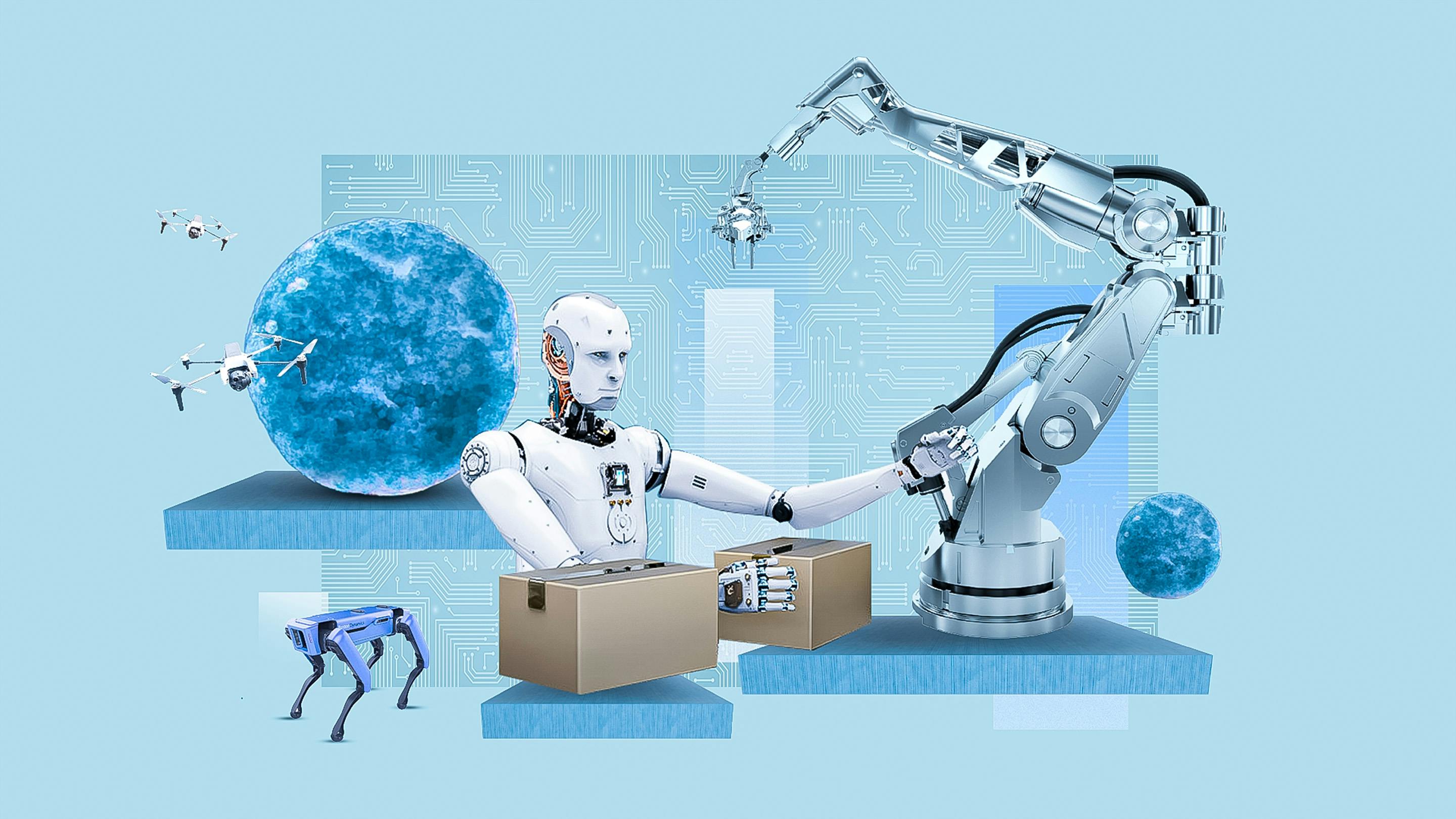
Factories are becoming “smart ecosystems” where robots and humans work side by side.
These collaborative robots — known as cobots — handle repetitive, dangerous, or high-precision tasks, while humans focus on strategy, creativity, and supervision.

Benefits include:

  • Improved safety and efficiency

  • Reduced downtime through predictive maintenance

  • Real-time optimization using AI-driven analytics

3. Healthcare and Medicine

Autonomous systems are revolutionizing medical care by assisting doctors in surgery, diagnostics, and patient monitoring.
For instance:

  • Robotic surgical systems can operate with microscopic precision

  • AI algorithms can analyze scans faster than humans

  • Smart monitoring devices track patient health continuously

This integration enhances accuracy, reduces human error, and expands access to healthcare worldwide.

4. Finance and Data Analysis

Autonomous trading algorithms and risk analysis systems now manage billions in assets. These systems can:

  • Analyze millions of data points in seconds

  • Detect anomalies or fraud patterns

  • Execute trades autonomously based on real-time signals

While speed and accuracy have improved, it also raises concerns about transparency and overreliance on algorithms.


The Human-Machine Partnership

The most exciting part of this evolution isn’t that machines are replacing humans — it’s that they’re becoming partners. Autonomous systems complement human strengths by taking over repetitive, data-heavy, or hazardous tasks while humans provide:

  • Ethical judgment

  • Emotional intelligence

  • Creative problem-solving

This partnership is most evident in sectors like aviation and logistics, where humans still supervise and validate machine decisions.


Challenges and Ethical Considerations

As autonomy grows, so do questions about trust, responsibility, and ethics.
Some key challenges include:

  • Accountability: Who’s responsible when an autonomous vehicle crashes?

  • Job displacement: How do industries support workers replaced by intelligent systems?

  • Bias and fairness: AI systems learn from data — if that data is biased, decisions will be too.

Building transparency into AI algorithms and ensuring human oversight are essential steps to maintaining trust in autonomous technology.


The Future of Autonomous Collaboration

The next phase of this technological revolution is collaborative intelligence — where human insight and machine precision work seamlessly together.
Future autonomous systems will:

  • Learn continuously from real-world interactions

  • Communicate naturally with humans through speech and gesture

  • Adapt to new environments with minimal programming

Imagine an architect working with an AI co-designer that suggests structural improvements, or a doctor consulting an AI assistant that analyzes thousands of patient cases in real-time.


Conclusion: Machines as Teammates, Not Tools

Autonomous systems are no longer mere tools — they’re becoming teammates that augment human capabilities and transform industries. The key to success lies in designing these systems with collaboration, transparency, and human-centered values at their core.

As we move toward an increasingly automated world, the question isn’t whether machines will replace humans — it’s how effectively we can work together to unlock innovation, efficiency, and progress.